
FAMOUS WRITERS AND POETS
OF TRIESTE
JOYCE, SVEVO AND MORE
Trieste’s atmospheric cafés, its crossroads of cultures, and its Austro-Hungarian legacy have attracted and welcomed some of Europe’s most influential writers. From James Joyce to Italo Svevo, and lesser-known but inspired residents like Umberto Saba and Rainer Maria Rilke, literary history flows beneath Trieste’s porticoes.
James Joyce & Italo Svevo: A Mutual Awakening
James Joyce arrived in Trieste in 1902, teaching English at the Berlitz School. One of his students was Ettore Schmitz, who later adopted the pen name Italo Svevo. Joyce recognized Svevo’s talent, encouraging him to revive his writing, leading to the masterpiece La coscienza di Zeno (1923). Their friendship was intellectual and personal: two kindred spirits forging modernist literature in a café-rich, cross-cultural city.
Places tied to them:
• Caffè San Marco: Literary haunt where both authors met, wrote, and debated ideas.
• Viale XX Settembre: The boulevard where Svevo once lived, frequented in his novels and real life.
• Piazza della Borsa: Frequently mentioned in Svevo’s work as the square striped with financiers and the pace of commerce that shaped his characters.

Umberto Saba & Trieste’s Literary Fabric
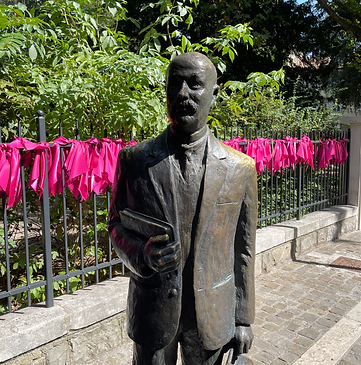
Born in 1883, Umberto Saba became one of Italy’s most beloved poets. He founded a small antiquarian bookshop in Trieste in 1919 and is still celebrated by plaques, bronze statues, and literary walking tours today. His verse, rooted in Jewish Triestin identity, still echoes through modern cafes and book-lined corners.
Rainer Maria Rilke & the Elegies at Duino Castle
Though not a native, Rilke spent time in Duino Castle, invited by Princess Marie von Thurn und Taxis. Standing on the cliffs, he composed the first of his Duino Elegies; arguably his greatest work, inspired by sea, stone, and solitude. The Sentiero Rilke now traces the poet’s seaside path alongside Duino’s courtyard.
Trieste’s Literary Legacy Today
• Museo Joyce e Svevo: A small but charming museum with personal letters, photographs, and itineraries mapping literary Trieste.
• Plaques and Statues: In the Old Town and along Viale XX, bronze memorials and plaques mark spots tied to literary lives.
• Café culture: Still alive in San Marco, Pasticceria Pirona, and cafés on Piazza Unità; the ambience these writers once inhaled remains vibrant.
Trieste isn’t just picturesque: it’s literary. From Joyce’s expatriate enthusiasm to Svevo’s introspective realism and Rilke’s poetic awakening, the city has inspired writing that shaped modern literature. Walking its cafes, squares, and Duino cliffs is stepping into pages written by minds that reshaped storytelling.